


How to Start a Fresh-Cut Vegetable Processing Business
With the increasing demand for convenient, healthy, and ready-to-cook food, the fresh-cut vegetable industry is growing rapidly worldwide. Supermarkets, restaurants, catering companies, and food delivery businesses are looking for high-quality processed vegetables that can save preparation time while maintaining freshness and safety.
Starting a fresh-cut vegetable processing business can be a profitable opportunity. However, a successful vegetable processing plant requires high-quality raw materials, efficient processing technology, and reliable vegetable processing equipment.
This guide explains how to start a fresh-cut vegetable processing plant, including the processing process, required equipment, investment factors, and how to choose the right solution.
What Is Fresh-Cut Vegetable Processing?
Fresh-cut vegetable processing refers to the process of sorting, washing, cutting, drying, and packaging fresh vegetables to produce clean and ready-to-use vegetable products.
Compared with traditional vegetable sales, fresh-cut vegetables provide customers with:
- Reduced preparation time
- Improved food hygiene
- Consistent product quality
- Higher product value
Common fresh-cut vegetables include:
- Leafy vegetables
- Carrots
- Potatoes
- Onions
- Cabbage
- Lettuce
- Mixed vegetables
Fresh-Cut Vegetable Processing Process
A complete fresh-cut vegetable processing line usually includes several important steps.
1. Vegetable Sorting and Inspection
The first step is selecting suitable raw vegetables. Damaged, rotten, or low-quality vegetables are removed to ensure the quality of final products.
2. Vegetable Washing and Cleaning
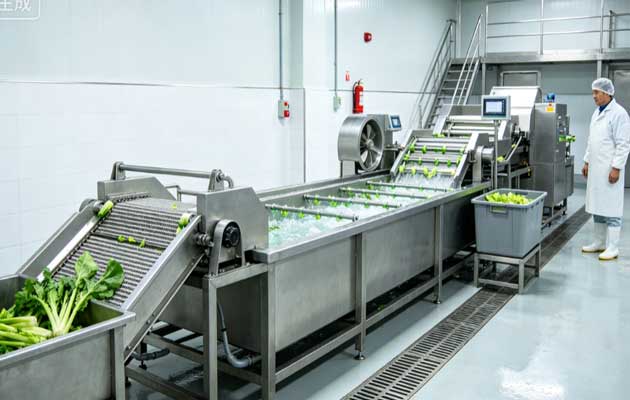
Washing is one of the most important steps in fresh-cut vegetable production.
Industrial vegetable washing machines use advanced cleaning technologies, including:
- Bubble washing
- Spray cleaning
- Water circulation
- Brush cleaning for root vegetables
These methods effectively remove soil, dust, and impurities while protecting vegetables from damage.
3. Vegetable Cutting
After washing, vegetables are transported to cutting machines for further processing.
According to different product requirements, vegetables can be processed into:
- Slices
- Strips
- Cubes
- Shreds
- Pieces
An automatic vegetable cutting machine improves cutting consistency and production efficiency.
4. Vegetable Drying and Water Removal
After washing and cutting, vegetables contain excess water. Removing surface moisture helps improve packaging quality and extend shelf life.
5. Vegetable Packaging
The final step is packaging processed vegetables according to market requirements.
- Vacuum packaging
- Modified atmosphere packaging
- Bag packaging
- Tray packaging
Equipment Needed for a Fresh-Cut Vegetable Processing Plant
Vegetable Washing Machine
The vegetable washing machine removes dirt, impurities, and contaminants from vegetables efficiently.
- Food-grade stainless steel structure
- Continuous washing operation
- High cleaning efficiency
- Adjustable processing speed
Vegetable Cutting Machine
The vegetable cutting machine is designed for automatic slicing, shredding, and cutting.
- Uniform cutting size
- High production capacity
- Reduced labor cost
Vegetable Drying Machine
The drying machine removes excess water after washing and improves product quality.
Packaging Machine
Automatic packaging equipment improves packaging speed and maintains product appearance.
Benefits of Automatic Fresh-Cut Vegetable Processing Line
Reduce Labor Costs
Automatic processing equipment reduces manual operations and helps companies lower labor expenses.
Improve Production Efficiency
Industrial vegetable processing lines can handle large quantities of vegetables continuously and meet commercial production requirements.
Ensure Product Quality
Automatic processing provides stable cleaning, cutting, and packaging results.
Improve Food Safety
Modern vegetable processing equipment uses food-grade materials and optimized processing technology to meet hygiene standards.
How Much Does a Fresh-Cut Vegetable Processing Line Cost?
The cost of a vegetable processing line depends on several factors:
- Production capacity
- Automation level
- Vegetable types
- Factory layout
- Equipment configuration
How to Choose the Right Vegetable Processing Equipment?
1. Determine Production Capacity
Choose equipment according to your expected output and business scale.
2. Consider Vegetable Types
Different vegetables require different washing, cutting, and drying solutions.
3. Choose Reliable Equipment Materials
Food processing machines should use durable materials such as stainless steel 304.
Why Choose GELGOOG Fresh-Cut Vegetable Processing Solutions?
GELGOOG provides complete fresh-cut vegetable processing solutions for customers worldwide.
- Vegetable washing systems
- Vegetable cutting equipment
- Drying systems
- Packaging solutions
- Complete turnkey processing lines
With professional experience in food processing machinery, GELGOOG helps customers build efficient and reliable vegetable processing plants according to their production requirements.
Conclusion
Starting a fresh-cut vegetable processing business requires proper planning, suitable equipment, and an efficient production process.
A complete vegetable processing line can help businesses reduce labor costs, improve product quality, increase production capacity, and meet the growing demand for convenient fresh vegetables.
FAQ
What vegetables can be processed by a fresh-cut vegetable processing line?
A fresh-cut vegetable processing line can process leafy vegetables, carrots, potatoes, onions, cabbage, lettuce, and many other vegetables.
How does an industrial vegetable washing machine work?
An industrial vegetable washing machine uses bubble washing, water circulation, and spray cleaning technology to remove dirt and impurities.
What is the production capacity of a vegetable processing line?
The production capacity depends on equipment configuration, vegetable type, and customer requirements.
How long can fresh-cut vegetables be stored?
The storage time depends on vegetable type, processing method, packaging technology, and storage conditions.


 E_mail
 contact
 Whatsapp
 TOP
TOP